Paper Types & Quality Guide
Choosing the right paper stock for your scorecards is crucial for durability, print quality, and player experience. This comprehensive guide covers paper weights, coatings, weather resistance, and helps you find the best paper for your course's specific needs.
Understanding Paper Basics
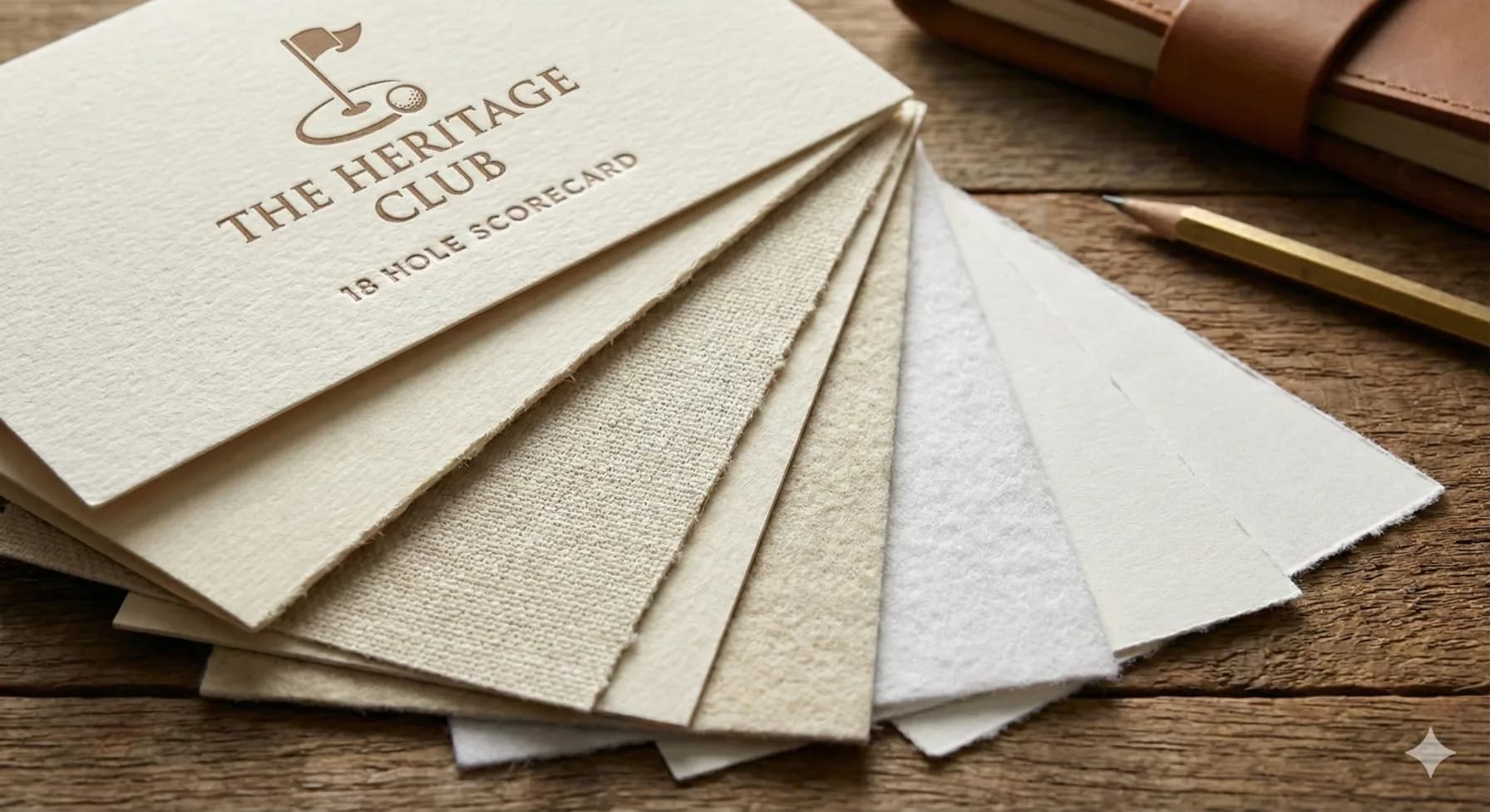
The paper you choose for your scorecards affects everything from print quality to longevity. Understanding paper specifications helps you make informed decisions that balance quality, durability, and budget.
Paper quality is measured by several factors including weight, thickness, coating, and finish. Each characteristic plays a role in how your scorecard looks, feels, and performs on the course.
Paper Weights Explained
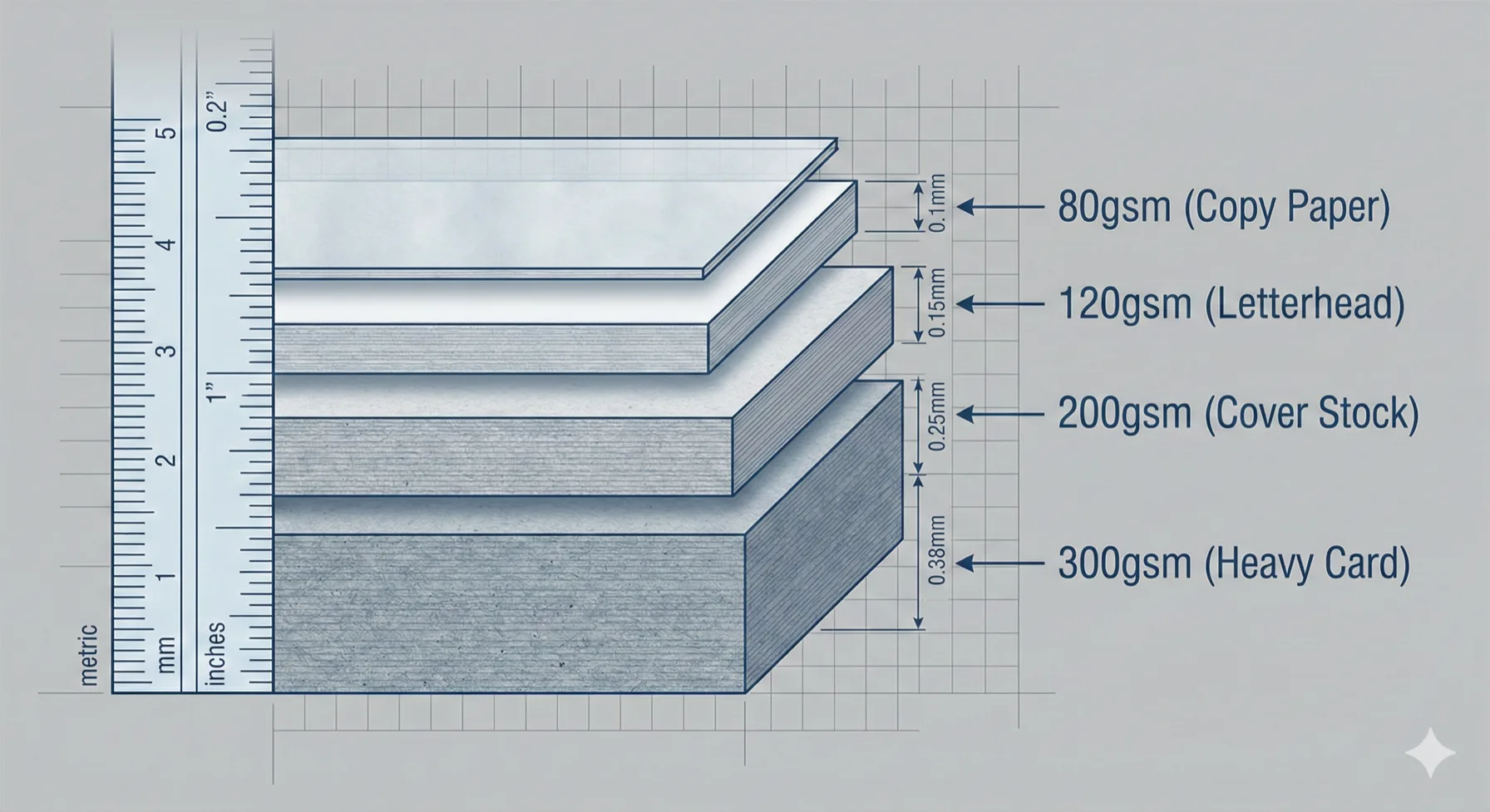
Paper weight indicates the paper's thickness and sturdiness. The two common measurement systems—pounds (lb) and grams per square meter (gsm)—can be confusing, but understanding the conversion helps you compare options across different suppliers.
GSM to Pounds Conversion
GSM (grams per square meter) is a universal measurement, while pound weight varies by paper type. Here's a practical conversion guide for scorecard applications:
| GSM | Cover (lb) | Bond (lb) | Typical Use |
|---|---|---|---|
| 80-90 gsm | — | 20-24 lb | Standard copy paper (too light) |
| 100-120 gsm | — | 28-32 lb | Budget scorecards, promotional |
| 135-170 gsm | 50-65 lb | — | Standard daily play scorecards |
| 200-250 gsm | 80-100 lb | — | Premium tournament cards |
| 270-350 gsm | 100-130 lb | — | Card stock, luxury feel |
Weight Categories for Scorecards
- Light (80-120 gsm): Budget-friendly, suitable for single-use or promotional cards. Feels flimsy and tears easily when wet.
- Medium (135-170 gsm): Standard choice for most courses. Good balance of quality and cost, provides adequate durability for a single round.
- Heavy (200-250 gsm): Premium feel, excellent durability, professional appearance. Ideal for member cards and tournaments.
- Card Stock (270+ gsm): Maximum durability, luxury tactile quality, highest cost. Best for reusable cards and high-end clubs.
Recommended Weights by Use Case
- Daily Play Cards: 135-170 gsm (50-65 lb cover)
- Tournament Cards: 200-250 gsm (80-100 lb cover)
- Member Cards: 250-300 gsm (100-110 lb cover)
- Yardage Books Cover: 250-350 gsm (100-130 lb cover)
- Yardage Books Interior: 100-135 gsm (70-80 lb text)
Coated vs Uncoated Paper
The coating on paper significantly impacts print quality, writing experience, and durability. Understanding the differences helps you choose the right paper for your specific needs.
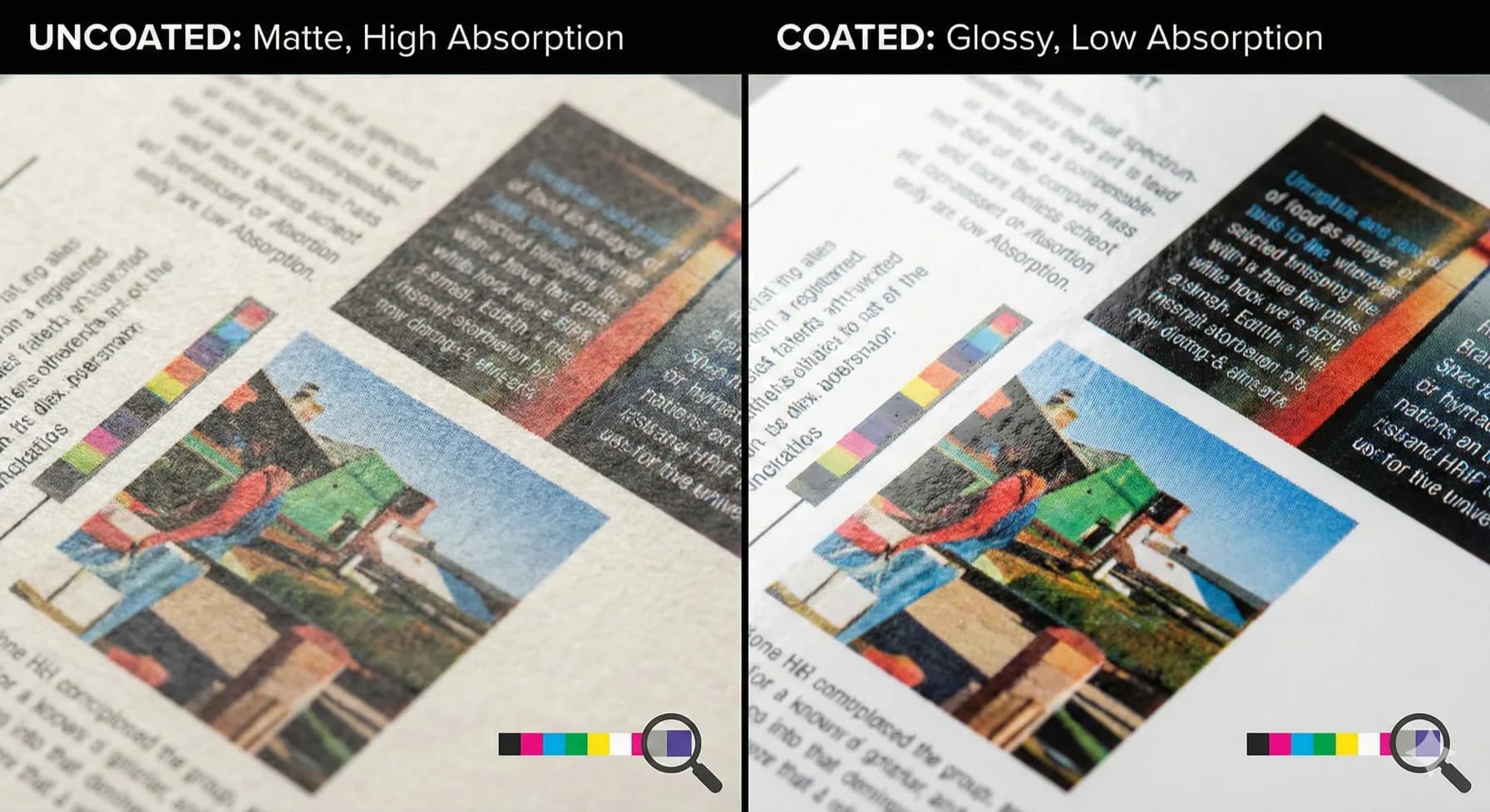
Uncoated Paper
Uncoated paper has a natural, textured surface without any surface treatment. It's the traditional choice that many courses prefer for its classic feel.
- Writing Experience: Excellent pen and pencil grip, no smearing
- Print Quality: Colors appear softer and more muted
- Ink Absorption: High absorption means ink dries quickly but may spread slightly
- Durability: More susceptible to moisture and staining
- Best For: Courses prioritizing writing ease over print vibrancy
Coated Paper
Coated paper has a clay or polymer coating that creates a smoother, sealed surface. Available in matte, satin, and gloss finishes.
- Writing Experience: May require specific pens; pencil marks can smear
- Print Quality: Sharper images, more vibrant colors
- Ink Absorption: Ink sits on surface, requiring dry time
- Durability: Better resistance to moisture and handling
- Best For: Courses with detailed graphics or photography
| Feature | Uncoated | Matte Coated | Gloss Coated |
|---|---|---|---|
| Writing Quality | Excellent | Good | Poor |
| Color Vibrancy | Soft/Muted | Good | Excellent |
| Outdoor Readability | Excellent | Excellent | Poor (glare) |
| Water Resistance | Low | Medium | Medium-High |
| Cost | $ | $$ | $$ |
Weather Resistance Options
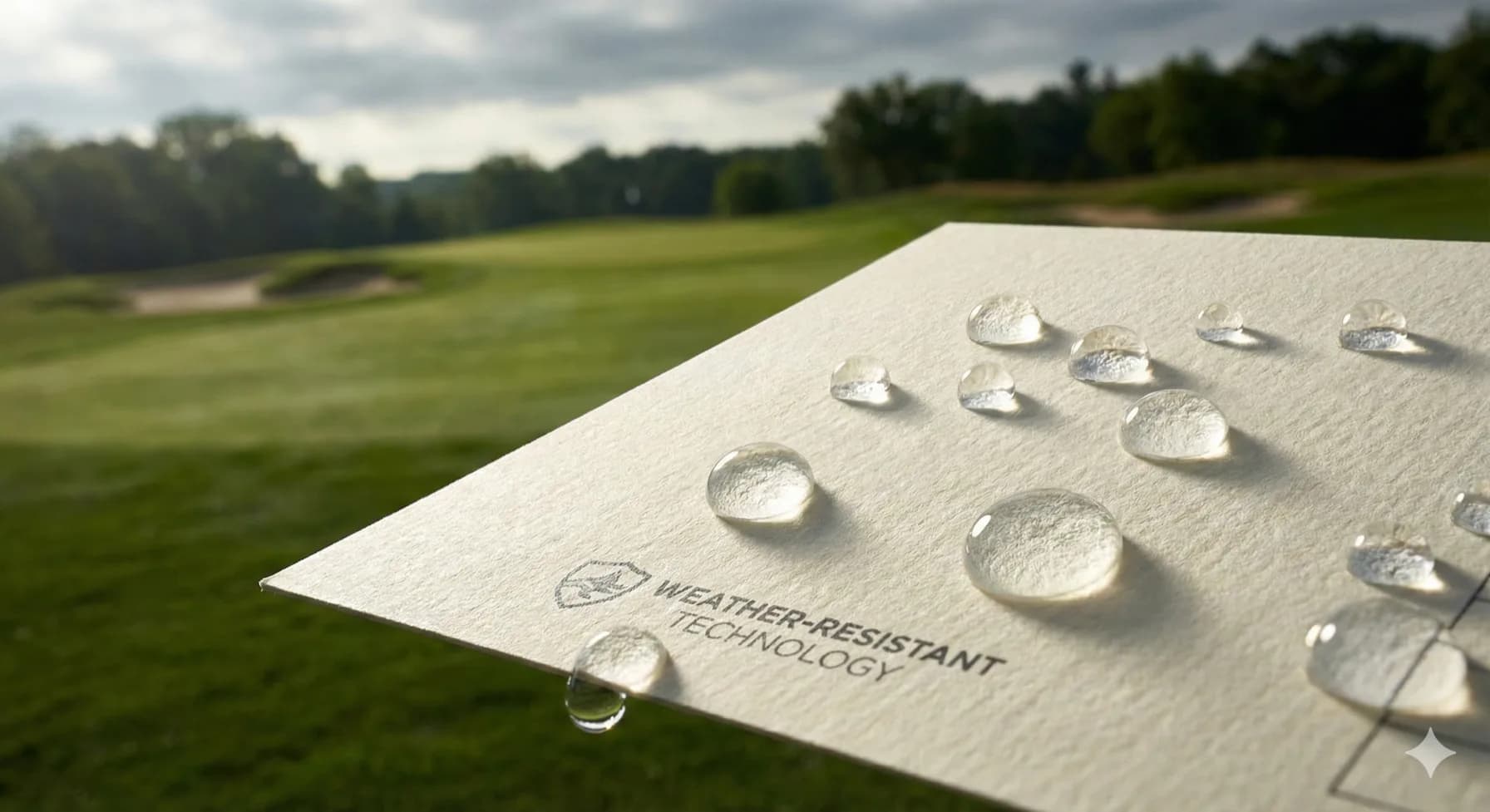
For courses in humid or rainy climates, weather-resistant paper can be the difference between usable and ruined scorecards. Here are your options for outdoor durability:
Water-Resistant Coatings
Traditional paper can be treated with water-resistant coatings that repel moisture without changing the paper's fundamental properties.
- UV Coating: Adds moisture resistance plus fade protection
- Aqueous Coating: Water-based protection, more eco-friendly
- Lamination: Plastic film overlay for maximum protection
Synthetic Paper
Synthetic papers are made from plastic polymers instead of wood pulp, offering complete waterproofing and tear resistance.
- Pros: 100% waterproof, tear-proof, extremely durable
- Cons: Most expensive option, requires specific pens
- Best For: Coastal courses, high-rainfall areas, reusable cards
- Popular Brands: Yupo, Teslin, Neobond
Stone Paper
Made from calcium carbonate (limestone), stone paper offers water resistance with an environmentally friendly profile.
- Pros: Water-resistant, tree-free, smooth writing surface
- Cons: Sensitive to heat, limited availability
- Best For: Eco-conscious courses seeking water resistance
Paper and Ink Interaction
Understanding how paper interacts with ink is crucial for achieving the best print quality and ensuring your scorecards remain readable after players write on them.
Ink Absorption and Bleed
When ink meets paper, it either absorbs into the fibers or sits on the surface. This interaction affects both print quality and writing experience.
- High Absorption (Uncoated): Ink spreads into fibers, causing slight dot gain. Text may appear slightly heavier than designed. Excellent for quick-drying ballpoint pens.
- Low Absorption (Coated): Ink sits on surface for sharper images but requires dry time. May smear if touched immediately. Better for detailed graphics.
- Strike-Through: On thinner papers, ink can bleed through to the other side. Heavier weights prevent this issue.
Print Quality Considerations
- Dot Gain: Printed dots spread on uncoated paper—design files should account for 15-20% expansion
- Color Shift: Colors appear warmer on cream/ivory papers, true on bright white
- Fine Detail: Small text (under 8pt) reproduces better on coated stocks
- Solid Areas: Large color blocks show more variation on uncoated paper
Pen and Pencil Compatibility
Players will write scores on your cards, so pen compatibility matters as much as print quality:
- Ballpoint Pens: Work on all paper types, best for outdoor use
- Pencils: Excellent on uncoated, may smear on gloss
- Golf Pencils: Specifically designed for outdoor conditions, work well on most stocks
- Gel Pens: Require dry time on coated papers, may smear in humid conditions
Durability Testing Results
We've tested various paper stocks under real-world golf course conditions to help you understand how different options perform.
Test Methodology
Our durability testing simulates typical scorecard use:
- 4-hour exposure to varying temperatures (65-95°F)
- Handling simulation (folding, pocket storage, cart storage)
- Moisture exposure (morning dew, light rain, beverage contact)
- Writing tests with standard golf pencils and ballpoint pens
- Sunlight exposure for fade resistance
Performance by Paper Type
| Paper Type | Handling | Moisture | Fade | Overall |
|---|---|---|---|---|
| Uncoated 135gsm | Fair | Poor | Good | 2/5 |
| Matte Coated 170gsm | Good | Good | Good | 3.5/5 |
| UV Coated 200gsm | Excellent | Good | Excellent | 4/5 |
| Laminated 200gsm | Excellent | Excellent | Excellent | 4.5/5 |
| Synthetic (Yupo) | Excellent | Excellent | Excellent | 5/5 |
Key Finding
For courses experiencing morning dew or occasional rain, UV-coated 200gsm paper offers the best balance of durability, print quality, and cost. Synthetic papers excel in all categories but cost 3-4x more than standard options.
Environmental & Recycled Options
Sustainability is increasingly important to golfers and courses alike. Environmentally responsible paper choices can enhance your course's reputation while reducing environmental impact. For comprehensive guidance, see our Sustainable Scorecard Options guide.
Recycled Paper
- Post-Consumer Waste (PCW): Made from recycled consumer products (30-100% content available)
- Pre-Consumer Waste: Manufacturing scraps repurposed into new paper
- Quality Considerations: Modern recycled papers rival virgin paper quality
- Cost: Typically 10-20% more than standard options
Environmental Certifications
- FSC Certified: Forest Stewardship Council approved sourcing
- SFI Certified: Sustainable Forestry Initiative standards
- Green Seal: Meets environmental leadership standards
- Carbon Neutral: Offset production emissions
Eco-Friendly Ink Options
- Soy-Based Inks: Renewable, easier to de-ink for recycling
- Vegetable Inks: Low VOC emissions, vibrant colors
- Water-Based Coatings: Replace petroleum-based options
Cost vs Quality Tradeoffs
Understanding the total cost of ownership helps make smart paper choices that balance quality with budget constraints.
Factors Affecting Price
- Paper Weight: Each step up adds approximately 15-25% to cost
- Coating Type: Matte adds 10-15%, UV coating adds 20-30%
- Synthetic Papers: 3-4x standard paper prices
- Order Quantity: Larger orders reduce per-unit cost by 20-40%
Assessing Value
Consider these factors when evaluating paper options:
- Waste Rate: Cheaper paper damaged by weather creates more waste
- Reprint Costs: Durable options may need fewer reprints
- Brand Perception: Premium paper signals quality to members
- Player Satisfaction: Legible, durable cards improve experience
Cost-Saving Strategies
- 1. Order in bulk during off-season for better pricing
- 2. Use premium paper for members, standard for daily play
- 3. Consider seasonal variations in paper choice
- 4. Combine orders with other course materials
- 5. Plan annual needs to avoid rush orders
Our Recommendations
Based on extensive experience with golf courses nationwide, here are our top recommendations for different scenarios:
Best Overall Value
170 gsm (65 lb) Matte Coated Stock
Perfect balance of durability, print quality, and cost. Suitable for 90% of courses. Good writing surface and moisture resistance for typical conditions.
Premium Tournament Choice
220 gsm (80 lb) UV Coated Stock
Maximum durability and professional appearance for high-end clubs and tournament play. Excellent fade resistance and moisture protection.
Budget Option
135 gsm (50 lb) Uncoated Stock
Cost-effective solution for high-volume needs or promotional events. Excellent writing surface, acceptable for dry climates.
All-Weather Champion
Synthetic Paper (Yupo or Teslin)
For coastal courses, high-rainfall regions, or reusable cards. Completely waterproof and tear-proof. Requires specific pens for writing.
Eco-Friendly Choice
170 gsm 100% Recycled FSC Certified
Sustainable choice without compromising quality. Appeals to environmentally conscious members. See our sustainability guide for more options.
Testing and Samples
Before committing to a large order, always test paper samples in real-world conditions to ensure they meet your needs.
What to Test
- Writing Quality: Try standard golf pencils and ballpoint pens
- Water Resistance: Expose to moisture, morning dew simulation
- Durability: Simulate pocket storage, folding, cart storage
- Print Quality: Check color accuracy and fine detail clarity
- Sunlight Readability: Test in bright outdoor conditions for glare
Sample Testing Tips
- Request samples of multiple weights and finishes
- Test with actual course staff and regular players
- Evaluate over several weeks in various weather conditions
- Compare costs per thousand for accurate budgeting
- Consider ordering a small pilot batch before full production
Making Your Decision
Selecting the right paper stock for your scorecards is an investment in your course's image and player experience. Consider your specific climate, budget, and player expectations when making your choice.
Remember that you can use different paper stocks for different purposes—premium for members and tournaments, standard for daily play. This strategy optimizes both cost and quality where they matter most.
Still unsure? Our team is here to help you evaluate options and make the best choice for your course. Contact us for personalized recommendations and samples.