What Is a Yardage Book? The Complete Guide to Golf's Most Valuable Tool
Everything you need to know about yardage books: their history, how professionals use them, step-by-step reading instructions, and tips for creating your own notes. Master this essential golf tool to play smarter and shoot lower scores.
What Is a Yardage Book?
A yardage book is a detailed guide to a golf course that provides hole-by-hole information including distances, hazard locations, green contours, and strategic playing tips. Unlike a simple scorecard, a yardage book serves as a comprehensive course management tool that helps golfers make better decisions on every shot.
Think of a yardage book as a pilot's flight chart for the golf course. It contains the precise measurements and visual information you need to navigate each hole successfully. Professional golfers never play competitive rounds without one, and amateur players can benefit just as much from this invaluable resource.
While modern GPS devices and rangefinders provide raw distance numbers, yardage books offer context that technology cannot: the optimal lines off the tee, where to miss on approach shots, and the subtle breaks in putting surfaces that only experience reveals.
The History of Yardage Books in Golf
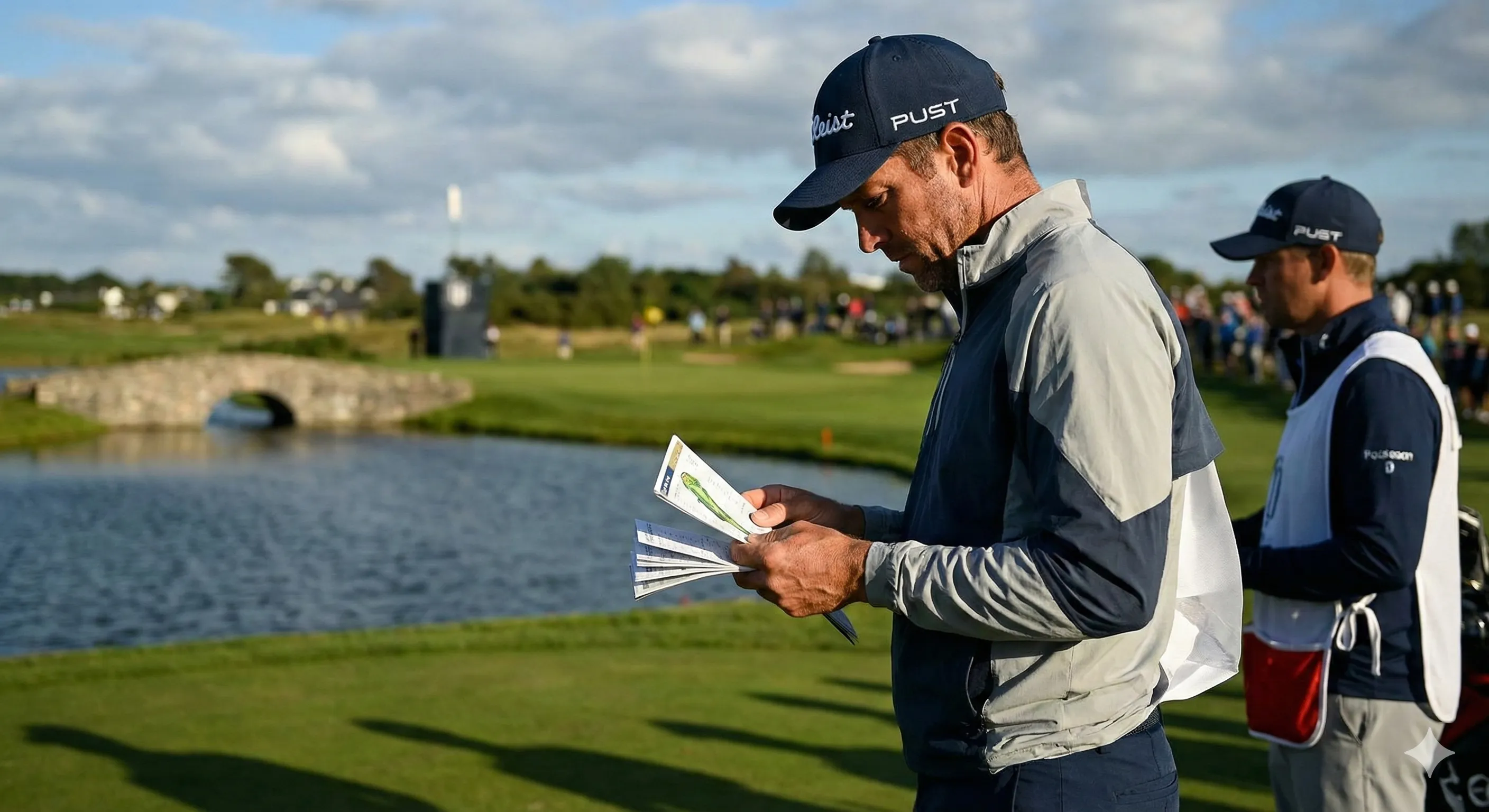
The yardage book as we know it today evolved from handwritten notes that caddies and players kept to remember course details. The practice became formalized in the 1960s and 1970s as professional golf prize money increased and every competitive advantage mattered.
The Caddie Tradition (Pre-1960s)
Before formal yardage books existed, experienced caddies served as living encyclopedias of course knowledge. They knew every bump, slope, and hidden hazard from years of walking the same fairways. Players depended entirely on their caddie's memory and judgment for distances and strategy.
Some resourceful caddies began sketching rough maps and jotting notes in small notebooks to supplement their memory. These informal guides were closely guarded secrets passed down from veteran caddies to apprentices.
The Formalization Era (1960s-1980s)
Jack Nicklaus is often credited with popularizing the detailed yardage book approach in professional golf. His meticulous preparation included measuring courses during practice rounds and creating comprehensive notes about every hole.
As other players saw Nicklaus's success, the practice spread throughout the professional tours. By the 1980s, nearly every tour player carried a yardage book, and companies began producing standardized books for tour events.
The Modern Era (1990s-Present)
Today's professional yardage books are works of precision engineering. Companies use laser mapping, aerial photography, and GPS technology to create books accurate to within a single yard. The best tour yardage books include:
- Laser-measured distances from hundreds of reference points
- Detailed green contour maps with percentage slopes
- Historical pin position data
- Wind pattern observations
- Drainage and firmness information
Despite the availability of GPS technology, professional golfers still rely heavily on printed yardage books. The Rules of Golf permit their use (unlike certain electronic devices in some events), and the tactile experience of writing notes creates deeper learning.
How Professional Golfers Use Yardage Books
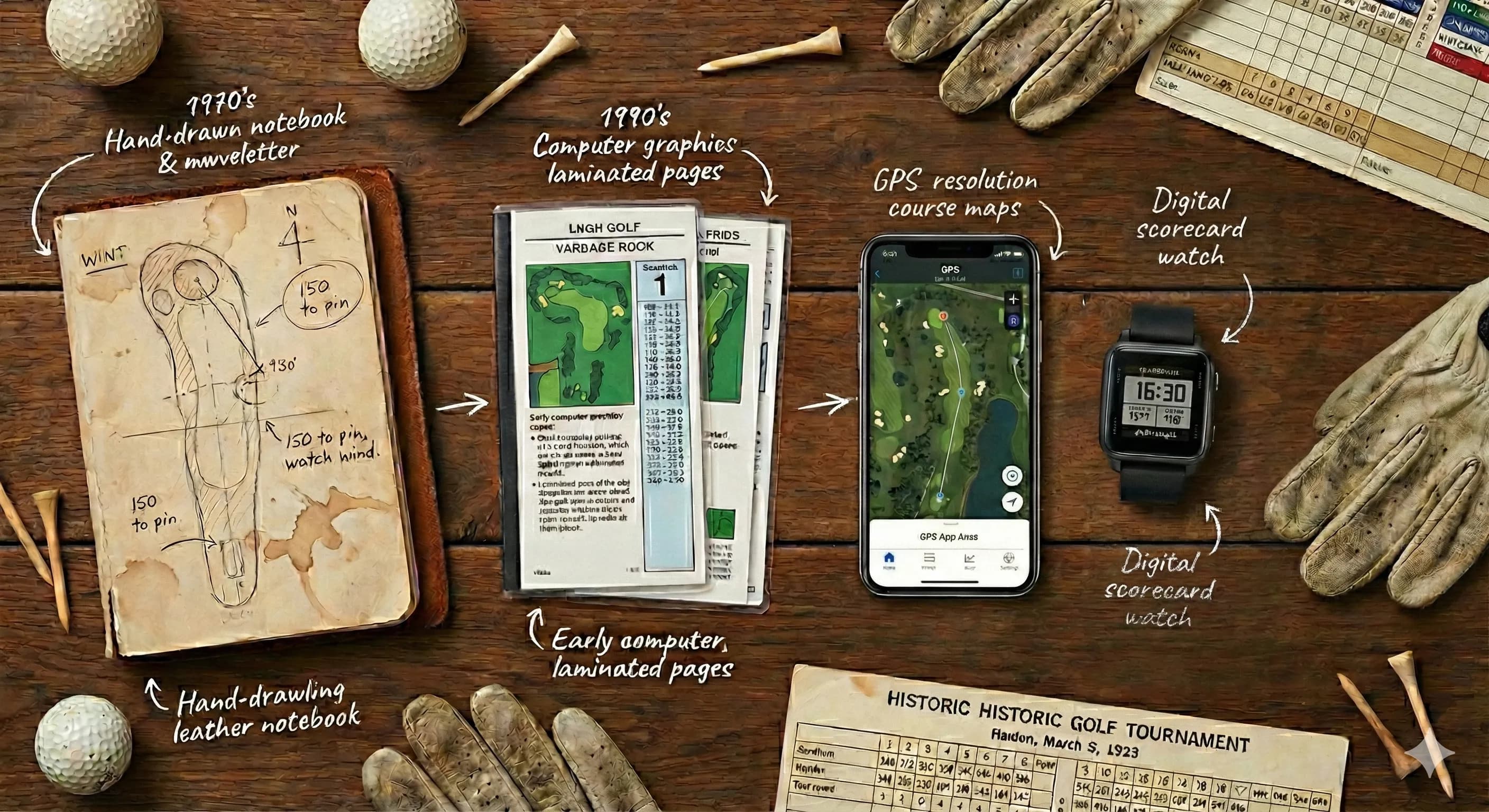
Watching a professional golfer consult their yardage book reveals a systematic approach to course management that separates elite players from amateurs. Here's how the pros extract maximum value from this tool.
Pre-Tournament Preparation
Before a tournament begins, professionals spend hours during practice rounds adding personal notes to their yardage books:
- Pace off key distances: Walking from sprinkler heads to hazard edges to verify book measurements
- Chart green speeds: Rolling putts from various positions to understand break and speed
- Note course conditions: Firmness of fairways and greens, rough thickness, sand texture
- Identify bailout zones: Where to miss when the pin is tucked
- Test wind patterns: How wind swirls through tree-lined holes
During Competitive Rounds
On the course, professionals consult their yardage books before every shot. A typical pre-shot routine includes:
- Locating their position on the hole diagram
- Calculating exact distance to the target
- Reviewing notes about the shot shape and landing area
- Checking wind direction against their recorded observations
- Confirming the play with their caddie
For approach shots, pros pay particular attention to front, middle, and back distances on greens, factoring in pin position to determine their target. They prefer leaving uphill putts and will often aim at the fat part of the green rather than firing at difficult pins.
Putting Strategy
Professional yardage books contain detailed green maps that show:
- Overall slope direction and severity
- Tiers and ridgelines
- Collection areas and false fronts
- Drainage patterns affecting break
- Green speed variations based on grain
Before putting, pros study these diagrams to understand the big picture of how the green moves. They combine book knowledge with their read of the current conditions to make final decisions.
How to Read and Interpret a Yardage Book
Learning to read a yardage book effectively is a skill that improves with practice. Here's a systematic approach to extracting the information you need.
Understanding the Hole Layout
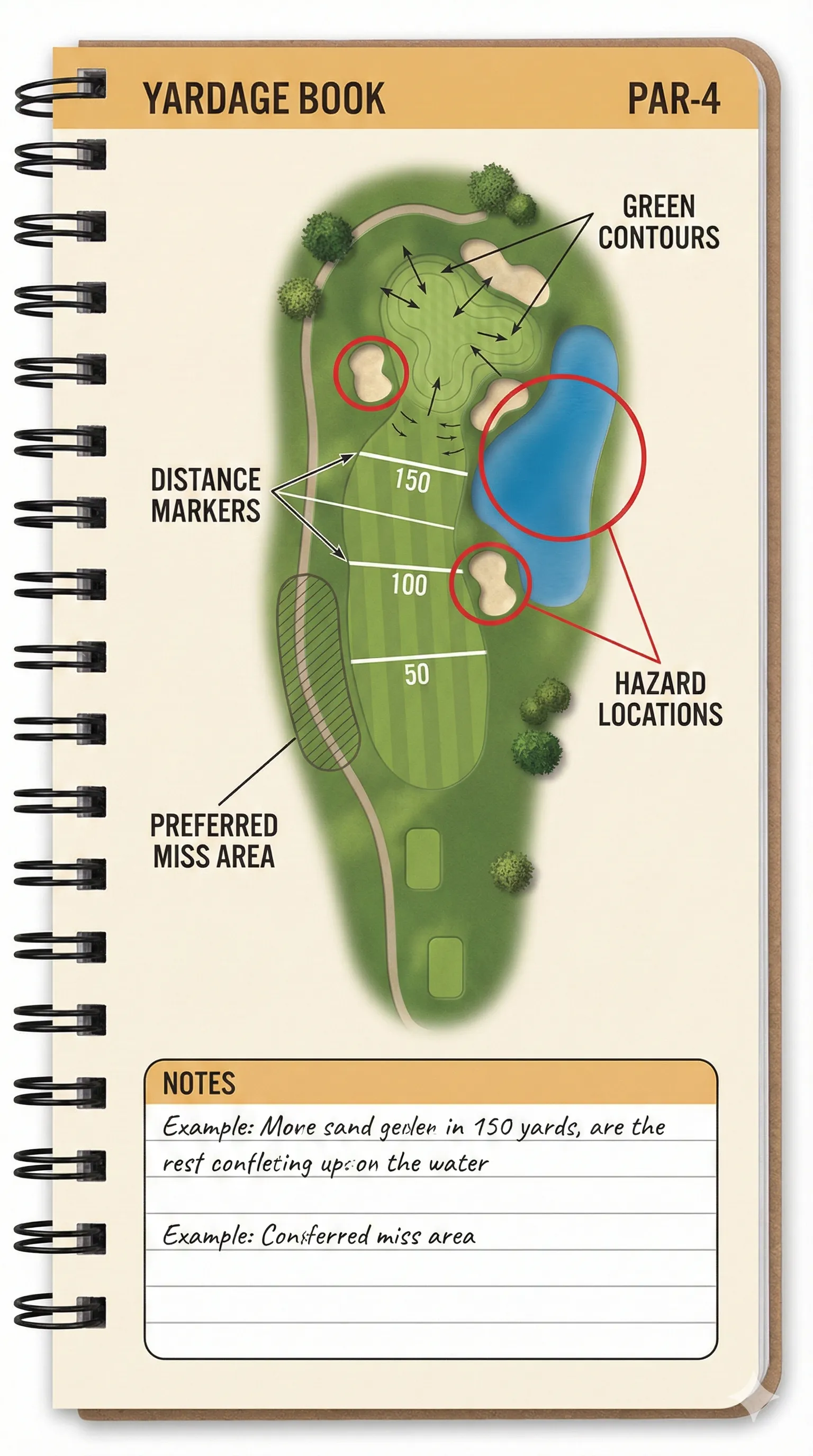
Most yardage books display holes with the tee at the bottom of the page and the green at the top. Key elements include:
- North arrow: Shows orientation for wind calculations
- Scale indicator: Helps judge distances visually
- Tee locations: Different colors represent different tees
- Fairway outline: Shows width and shape of landing areas
- Hazard markings: Bunkers, water, out of bounds
- Distance markers: Numbers from tee and to green
Calculating Distances
Yardage books typically provide distances in two ways:
- From the tee: Total distance to various points (150-yard marker, hazard edges, front of green)
- To the green: Distances from reference points to front, middle, and back of green
To calculate your shot distance: Find a nearby reference point (sprinkler head, marker, or landmark), pace off your distance to that point, then add or subtract from the book's measurement.
Reading Green Maps
Green diagrams use various conventions to show contours:
- Arrows: Point in the direction the ball will break (downhill)
- Contour lines: Closer lines mean steeper slopes
- Percentage grades: Numbers indicating slope severity
- Shading: Darker areas often indicate lower elevations
- Ridge marks: Bold lines showing high points
Always orient the green diagram so you're viewing it from your approach angle. This makes the slopes and breaks more intuitive to understand.
Interpreting Hazard Information
Yardage books show hazards in detail so you can calculate risk versus reward:
- Distance to carry the hazard
- Distance to the far edge (for layups)
- Width of the hazard
- Depth of bunkers and type of sand
- Water depths and penalty areas
DIY vs. Professional Yardage Books
Should you create your own yardage book or invest in a professionally produced one? Each approach has advantages depending on your needs.
Creating Your Own Yardage Book
Advantages:
- Deep learning through personal measurement and observation
- Customized to your game and playing tendencies
- No cost beyond time and basic materials
- Easily updated as your game evolves
Disadvantages:
- Time-intensive to create (several hours per course)
- Accuracy depends on measurement method
- May lack professional-quality graphics
- Durability issues with homemade materials
How to create a DIY yardage book:
- Print or sketch a basic hole layout using aerial imagery
- Walk the course with a rangefinder, recording key distances
- Note hazard locations and green contours
- Add personal playing notes during rounds
- Laminate pages for weather protection
Professional Yardage Books
Advantages:
- Laser-measured accuracy
- Professional design and readability
- Durable, weather-resistant materials
- Detailed green contour mapping
- Saves significant preparation time
Disadvantages:
- Cost ($15-50 depending on quality)
- May not include your personal preferences
- Not available for all courses
- Information may become outdated after renovations
Best practice: Start with a professional yardage book if available, then add your personal notes during practice rounds. This combines accurate baseline data with customized insights. Explore our custom yardage book printing →
Tips for Creating Notes in Your Yardage Book
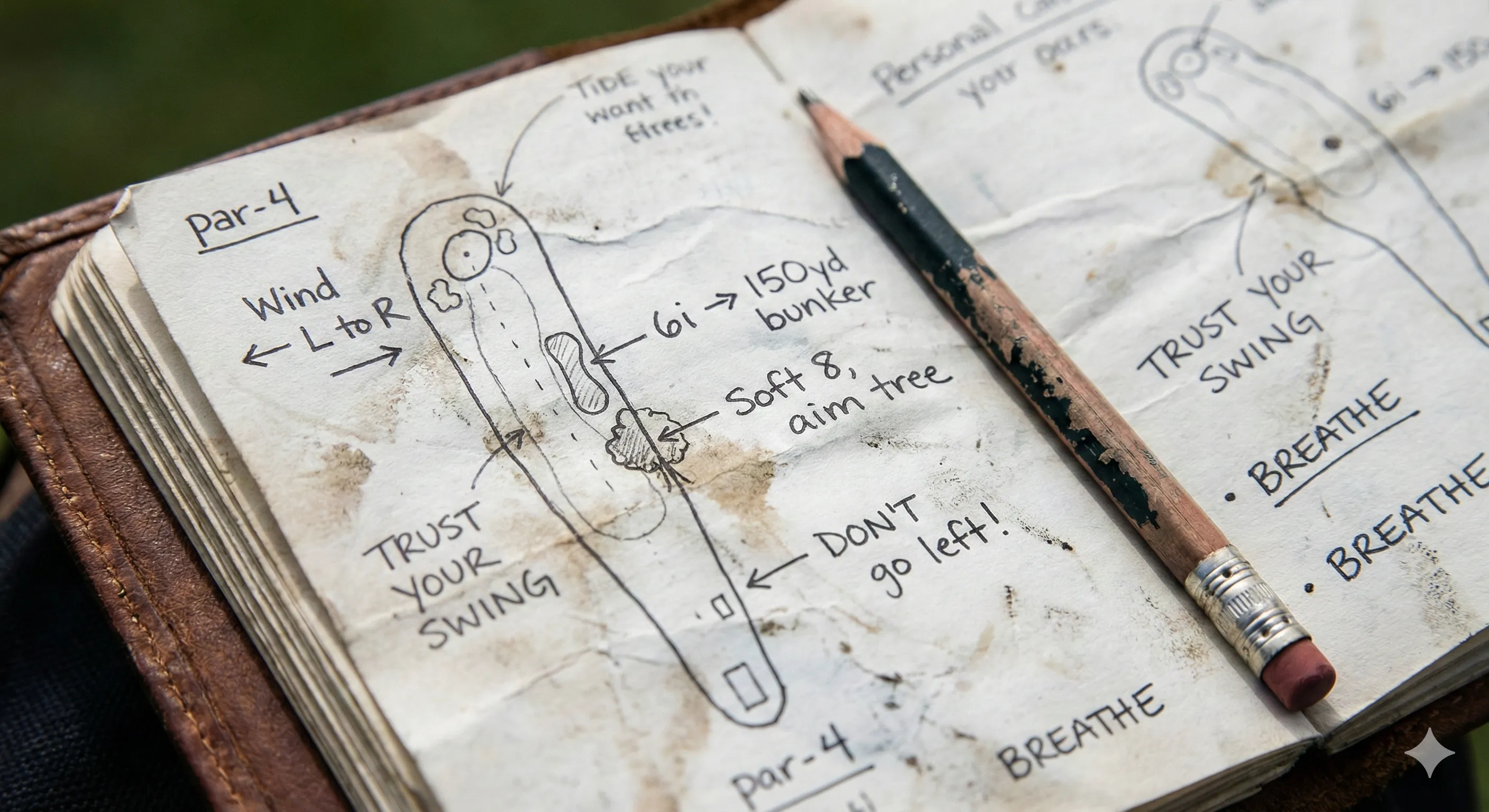
The most valuable yardage books contain personal observations accumulated over time. Here's how to build a library of useful notes.
What to Record
- Club selections: Write down which clubs you hit from specific yardages and conditions
- Miss tendencies: Note where your misses end up and why
- Wind effects: How wind from each direction affects shots
- Preferred lines: Your optimal tee shot targets
- Green behavior: How specific putts break differently than expected
- Trouble spots: Places to avoid and safe bailout areas
- Confidence notes: Shots that suit your eye and game
Developing a Notation System
Create consistent abbreviations and symbols for quick reference:
- F/M/B: Front, middle, back of green
- L/R: Left and right miss directions
- ↑↓: Uphill or downhill lies and putts
- ★: Particularly important information
- !: Danger zones to avoid
- ✓: Safe areas and preferred targets
Keeping Notes Current
Review and update your notes regularly:
- After each round, add new observations while memory is fresh
- Before playing, review notes for reminders
- Seasonally, check for course condition changes
- Annually, rewrite messy or outdated pages
Digital vs. Printed Yardage Books
The question of digital versus printed yardage books divides golfers. Each format offers distinct advantages.
The Case for Printed Books
- Permitted everywhere: Allowed in all competitive events
- Battery-free: Never runs out of power mid-round
- Tactile learning: Writing notes creates deeper memory
- Quick reference: Faster than scrolling on a screen
- Weather-resistant: Works in rain and bright sunlight
- No distractions: Can't receive notifications
The Case for Digital
- GPS integration: Real-time distances to any point
- Easy updates: Course changes reflected instantly
- Shot tracking: Automatic statistics and history
- Multiple courses: Carry every course in one device
- Zoom and pan: Examine details more closely
The Hybrid Approach
Many serious golfers use both: a printed yardage book for detailed strategy and note-taking, supplemented by a GPS device or app for real-time distance verification. This combination maximizes the benefits of each format.
Types of Yardage Books
Yardage books range from basic guides to tour-quality references. Choose the level that matches your needs and playing frequency.
Basic Yardage Books
Perfect for public courses and casual play, basic yardage books provide essential information in an affordable format.
- Hole-by-hole layouts with basic measurements
- Distances to hazards and landing areas
- Green contour indicators
- Par and handicap information
- Simple line drawings or aerial views
- Compact pocket size (typically 4"x6")
Premium Yardage Books
Designed for private clubs and championship courses, premium yardage books offer detailed information and superior presentation.
- High-resolution aerial photography
- Detailed green maps with slope percentages
- Multiple tee box yardages
- Sprinkler head locations and distances
- Waterproof or water-resistant paper
- Full-color printing throughout
Tour-Style Yardage Books
Modeled after professional tour books, these provide the most comprehensive course information available.
- Laser-measured distances to 1-yard accuracy
- Detailed green reading guides
- Elevation changes and carry distances
- Pin placement grids
- Notes sections for personal observations
- Weather-resistant synthetic paper
- Lie-flat spiral binding
Getting Started with Yardage Books
Ready to add yardage books to your golf toolkit? Here's how to begin.
For Your Home Course
- Check the pro shop for an existing yardage book
- If none exists, ask if the course has diagrams you can use
- Create a simple DIY version using aerial imagery and a rangefinder
- Add notes over multiple rounds to build comprehensive knowledge
For Travel and Tournament Golf
- Request yardage books when booking tee times
- Check if the course sells books on their website
- Arrive early for practice rounds to study and annotate
- Use the book alongside GPS for maximum information
Custom Yardage Books for Your Course
If your course doesn't have yardage books, consider commissioning custom books for members and guests. Professional printing with accurate measurements creates lasting value for players and generates pro shop revenue.
Conclusion
A yardage book is more than a distance guide—it's a strategic companion that helps you play smarter golf. Whether you're a weekend warrior or a competitive amateur, incorporating yardage books into your game will improve your course management and lower your scores.
Start simple: get a yardage book for your home course, learn to read it effectively, and begin adding personal notes. Over time, you'll build a valuable resource that reveals the course's secrets and helps you play your best golf.
Ready to create professional yardage books for your golf course? Contact our team to discuss custom yardage book design and printing.